
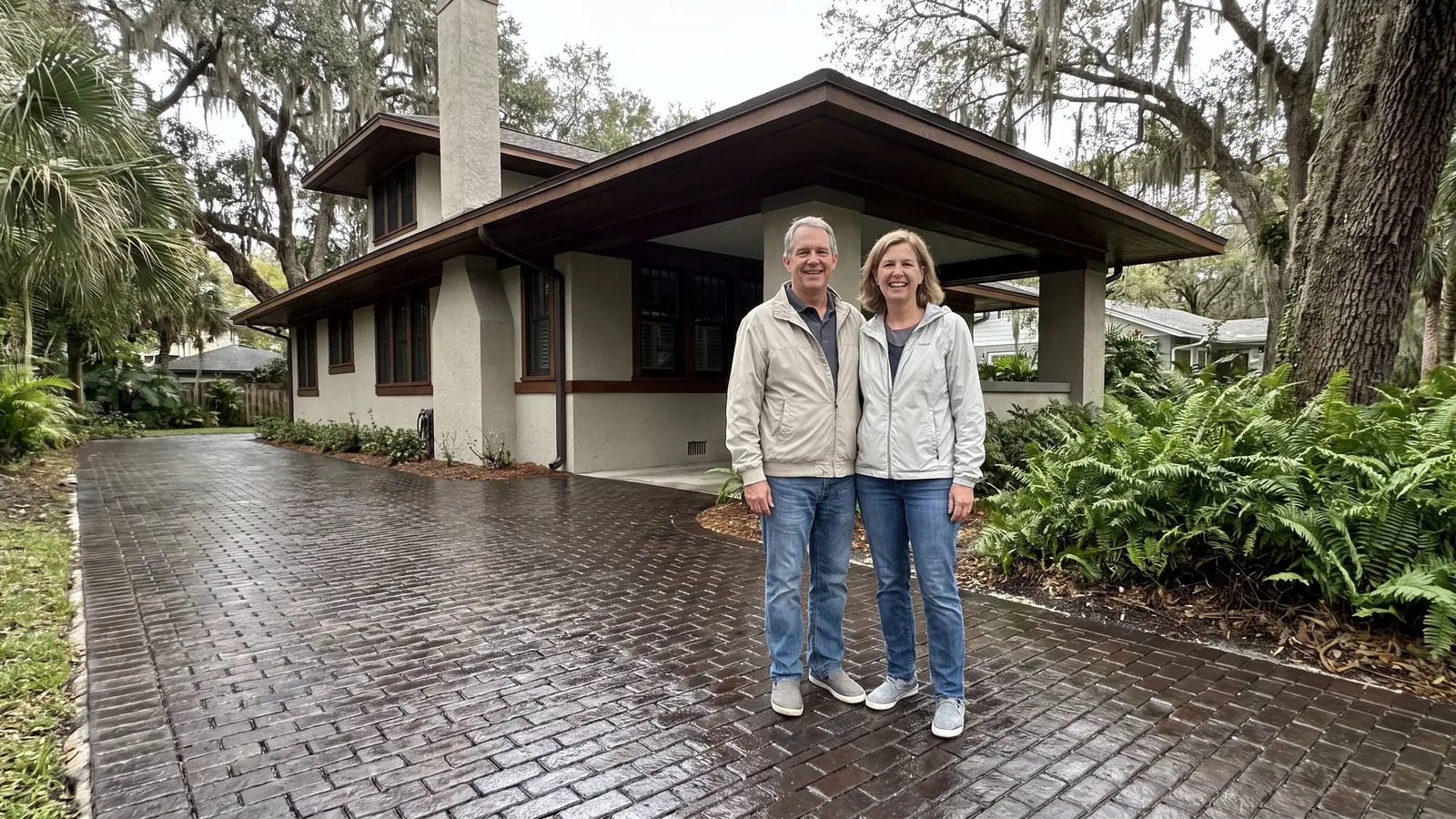
Paver sealing for Baymeadows homes
Paver Sealing in Baymeadows, FL
Ponds, lakes and wet ground shape Baymeadows pavers, so get a free sealing estimate by calling (904) 569-7795.
- Brings out deeper paver color
- Fresh joint sand helps lock pavers in place
- Gives weeds less room to grow
- Makes the surface easier to keep clean
- Free estimate, no obligation
Request a Free Estimate
Free, no obligation.
Fast, careful paver sealing in Baymeadows
Paver sealing is available in Baymeadows, from the condo courts near Baymeadows Circle West to the single-family streets around Deercreek. A local contractor cleans, re-sands and seals driveways, entry courts and patios, and the estimate is free. Ask when you ask for a free estimate and expect an answer within 1 business day, usually much sooner.
Picture a townhome entry gone green at the joints, with a stained patio under the leaves. After a wash, fresh sand and a new coat, those same pavers read as one clean color again. If you would like to describe your own spot first, call (904) 569-7795 and ask anything you like.
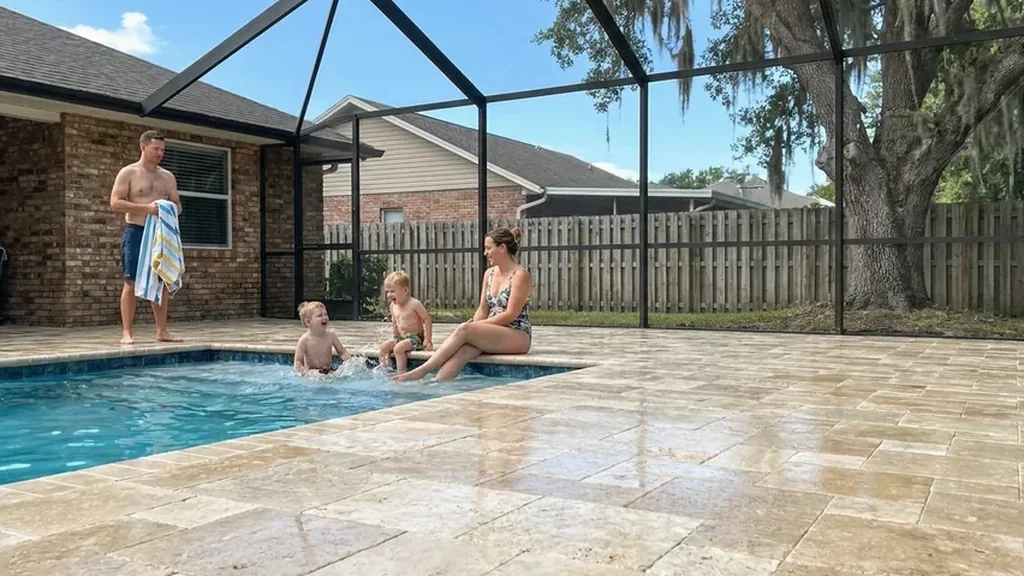
Why hire a local paver sealing contractor in Baymeadows?
Baymeadows homes sit under associations, gates and shared ponds, so a local contractor who already knows those rules saves you calls and delays. To ask how that would work at your address, ask for a free estimate.
A free look, no strings
The contractor looks over your Baymeadows pavers and gives you a price at no charge. You owe nothing until you say yes, and you can take your time.
A range to compare against
Companies around Northeast Florida commonly publish $1.75 to $3.25 per square foot to clean, sand and seal. Use that to size up any Baymeadows bid.
A finish your association accepts
A natural matte look is more likely to count as upkeep than a high gloss. Check your Baymeadows rules before you choose.
You set the date
You pick the day, the finish and whether to go ahead. A Baymeadows estimate carries no obligation.
Get Your Free Estimate in Baymeadows
Tell us about your pavers in Baymeadows.
Free, no obligation
What paver problems show up most in Baymeadows?
Damp ground under the bedding sand
Wikipedia describes Baymeadows as a place of wetland ponds and lakes. The USDA's Pottsburg soil series, first described in Duval County, can hold a water table 6 to 12 inches down for months on flatwoods sites. One Southside paver page says the sand under pavers can stay damp after rain. Sealer laid over a damp surface can turn hazy, so a Baymeadows job may have to wait for a dry stretch. Waiting is what keeps the finish from clouding. Ponds and lakes ring many communities here, so a damp edge near the water can stay soft long after the top of the paver looks dry.
Green growth in shaded entries
Green algae grows where shade and moisture meet, such as under trees, patio roofs and on the north side of a building. Deercreek calls itself a mature community lush with trees, so shade is part of the setting. Algae left under a coat of sealer only looks worse later, which means it comes off first. Expect the green to start where the sun rarely lands, such as a north-facing entry or a walk under a carport roof. A cleaned surface looks a shade or two lighter at once, and that is the algae gone, not the paver. Carports like the assigned ones at Village Green add roof shade over parking and walks.
Joint sand washed out by summer storms
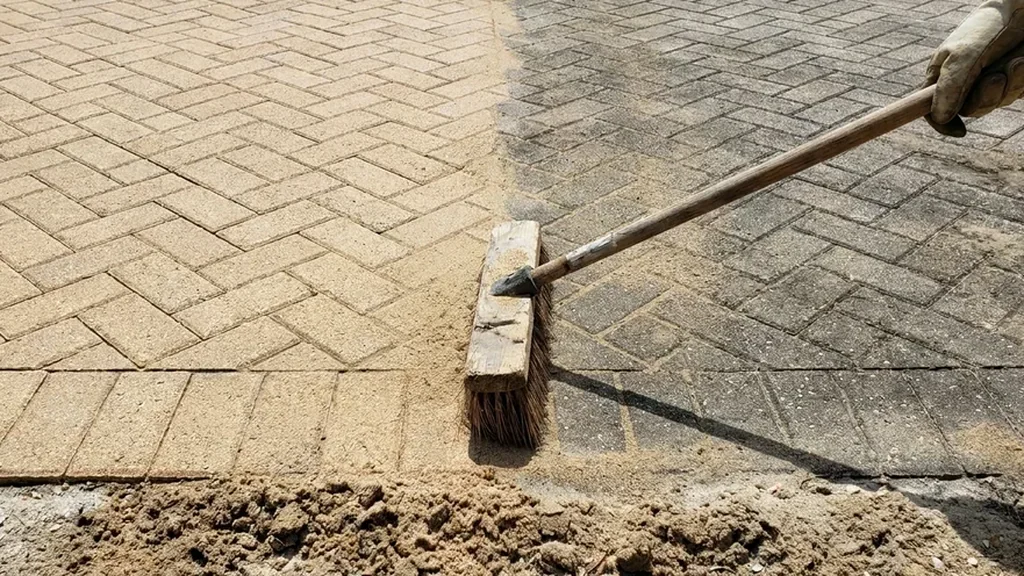
Jacksonville gets about 52 inches of rain a year, mostly from May through September in short, hard downpours. Those storms carry sand out of the joints on drives and entry steps, and they can cut small channels along the edges where water runs off. Once joints open, weeds and ants move in, and one Jacksonville company points out that pulling weeds does not close the gap. Fresh sand has to go back in before any sealer, which is why the joints get checked first. One Jacksonville sealing company calls sinking and washouts the top reason pavers fail, because rain reaches the base once the joint sand is gone.
Unknown sealer on older condo walks
Los Lagos dates to 1974 and Village Green to 1983, so some courts and walkways have likely had more than one owner and more than one coat. A solvent-based coat from the past rules out any water-based sealer. If nobody remembers the first product, the contractor has to find out before choosing a new one, and an old coat that has turned white or flaky is stripped, not covered. Failed sealer is stripped first, which adds to the price. One company applies three coats on pavers that were never sealed and two as standard, so the history of your pavers shapes the plan and the price.
Color that fades in open sun
Driveways and walks with no tree cover take full sun all day. Unsealed pavers fade in the sun, one Jacksonville company says, and a color-enhancing sealer restores the tone. Fade shows first where cars park every day and where sun hits the same strip each afternoon, so a drive can look two-toned within a few seasons. A fresh coat protects the color, and it can be redone when water stops beading. Color-enhancing sealer deepens the tone, and a Southside paver page says that kind of finish is likelier than a natural look to need association approval.
Does paver sealing work differently in Baymeadows condos and single-family streets?
Yes, because who owns the pavers changes who decides. In a condo, Florida Statute 718.113 makes the association responsible for common elements, so a shared patio or walkway is its call. A driveway or private entry court that belongs to one owner is yours to decide. Say which kind of pavers you own when you ask for a free estimate.
Baymeadows grew in layers. Along Baymeadows Circle West, Los Lagos Condominiums were built in 1974 and the Linkside patio homes came in the late 1970s, with Village Green following in 1983. Stonebridge on East Baymeadows Road mixes concrete block condos with wood-frame townhomes behind a gate, and the Meadow Walk subdivision came later on the old fairways. Entry courts, garage aprons and patios differ across all of them, so call (904) 569-7795 and say which one is yours.
Gates and HOA rules come next. A Southside paver page says gated communities may limit contractor hours and vehicle access, and that a natural-look sealer is likelier to count as upkeep than a high gloss. Deercreek's HOA runs the private roads, the entrance and the gate house, so plan gate access ahead of time. Florida Statute 720.3035 says a denial must be in writing and name the rule, which means you can ask for it, and then ask for a free estimate.
What does paver sealing cost in Baymeadows?
Published rates around Northeast Florida run $1.75 to $3.25 per square foot for the full clean, sand and seal. A small Baymeadows patio can cost more per foot than a long driveway, because prep time does not shrink with the area. A few set a minimum job size, which can hit a small patio hardest. For a figure that fits the pavers at your address, ask for a free estimate.
Old sealer is the biggest swing. One Jacksonville company says failed sealer is stripped first instead of coated over, and stripping costs extra. Gates, stairs and tight carport corners add hand work too. Call (904) 569-7795 to find out which of these fit your property before work begins.
| Paved area | Typical example | Clean, sand and seal |
|---|---|---|
| 300 sq ft | Small patio or walkway | $525 to $975 |
| 600 sq ft | Two car driveway | $1,050 to $1,950 |
| 1,000 sq ft | Large driveway or pool deck | $1,750 to $3,250 |
| 1,500 sq ft | Driveway plus pool deck | $2,625 to $4,875 |
Math based on the $1.75 to $3.25 per square foot that Northeast Florida paver companies publish. Your contractor sets the actual price after seeing the surface. Repairs, leveling and stripping failed sealer are usually extra.
How does a paver sealing job work in Baymeadows?
Walk the pavers and ask about the old coat
The contractor looks at how water drains off your Baymeadows pavers and where shade keeps them wet. Sunken or lifted spots are reset first, since sealer locks in whatever sits under it. The contractor also asks whether the pavers were sealed before, because water-based sealer cannot go over solvent-based. Condo owners should say who manages the patio, since that person may need to approve the work. Gate codes, building rules and parking limits are worth sharing at this stage, since gated communities may limit contractor hours and vehicle access.
Wash off algae and film
Cleaning takes off green growth, tire marks and the gray film that builds up under trees. Shared walks and courts get done on a day the association has cleared, which avoids surprises for neighbors. Oil and rust spots get treated at this stage, and some marks may not come out fully. A trade supplier warns that going above 3,000 PSI on standard concrete pavers can strip the surface, so the wash is steady and not harsh. Rinse water is aimed away from walls and planting beds. A car that sat in one spot may have left an oil stain, and oil and rust spots are pretreated before the wash starts.
Put fresh sand back in the joints
Since washing removes joint sand, the contractor replaces it ahead of the sealer. On low, wet ground, open joints let dirt settle in and weeds follow. The joints are filled, packed and swept clean, and any extra sand on the surface is brushed off before sealer goes down. Ask for a sand color that matches your pavers, since some companies offer several, and a close match makes the finished surface look clean and even. An empty joint is a gap, and pulling weeds does not fix a gap, so the contractor refills it instead of just clearing the green.
Hold for a dry surface
Sealer needs a dry surface, and damp bedding sand can hold water well after a storm. The pavers may feel dry on top while the sand beneath is not. One Jacksonville page puts the wait at 24 to 48 hours after cleaning. A summer afternoon shower can push the day back. Hazing, a St. Augustine company explains, comes from sealing a driveway that is still damp. PaverGuard says spring and fall often bring the steadiest weather, and that sealing right before a forecast downpour is a mistake.
Seal, then stay off
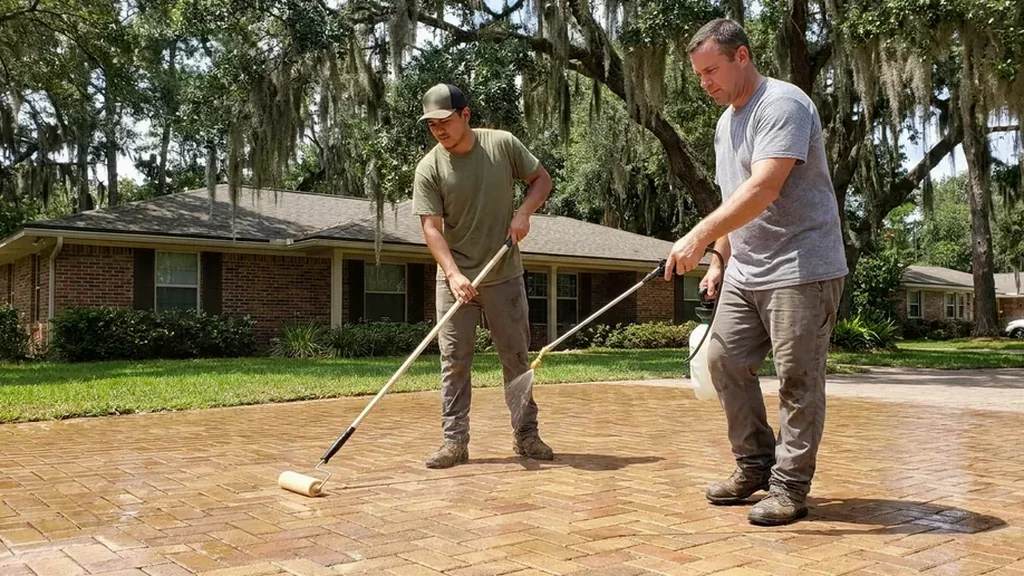
Pros typically spray the sealer and back-roll it so it reaches the joints and evens out in the tire lanes. A second coat is common on pavers that were never sealed, according to one Jacksonville company. Matte keeps the natural look, while a wet look deepens color but shows scuffs sooner, so a busy drive may prefer matte. A Jacksonville company puts walking at a few hours after sealing and driving at about a day. Keep a record of the product name, since the next coat should match. A natural-look finish is the usual fit for an association, so ask which sheen your documents prefer before the day arrives.
Complete paver services in Baymeadows
A Baymeadows job runs in order: wash, re-sand, dry, then seal. The wash clears algae and gray film from shaded entries, fresh sand goes into the joints, and the sealer goes on last so nothing dirty is trapped under it. Shaded surfaces may need extra wash time before the dry wait starts. To hear how long each stage takes on your lot, call (904) 569-7795.
Surfaces vary here. Driveways and garage aprons take tires every day, while entry courts under trees stay damp and go green first. Patios beside Baymeadows ponds get splash and shade both. Tell the contractor which of these you have when you ask for a free estimate, and mention any shared walkway that your association maintains.
Sealer comes in water-based and solvent-based, and the old coat decides which can go on. A film-forming sealer gives a matte, satin or wet look, while a penetrating one leaves the look almost unchanged. After that you pick matte, which hides scuffs, or a wet look, which deepens color but shows wear sooner. For help choosing a finish that suits a Baymeadows townhome front, call (904) 569-7795.
Jacksonville gets most of its rain from May through September, so a Baymeadows date can move. Low ground may stay damp long after a sunny day, and the sealer needs that dry stretch to cure. Companies commonly quote two to five years between coats, and a sunny driveway may want a recoat sooner. To ask about timing for your street, ask for a free estimate.
Questions to ask before you hire
- Which sheen will my pavers end up with, and is that something I pick?
- Do the lights and sprinkler lines set in my pavers get covered or avoided?
- What keeps the mulch, ferns and potted palms at the edges from getting splashed?
- What is the next step if the finish looks cloudy a week later?
- Does the sealer change how slippery the surface feels when it rains?
- How much water pressure do you use, and could it pit the surface?
- Can you put a small sample patch down before the whole driveway gets sealed?
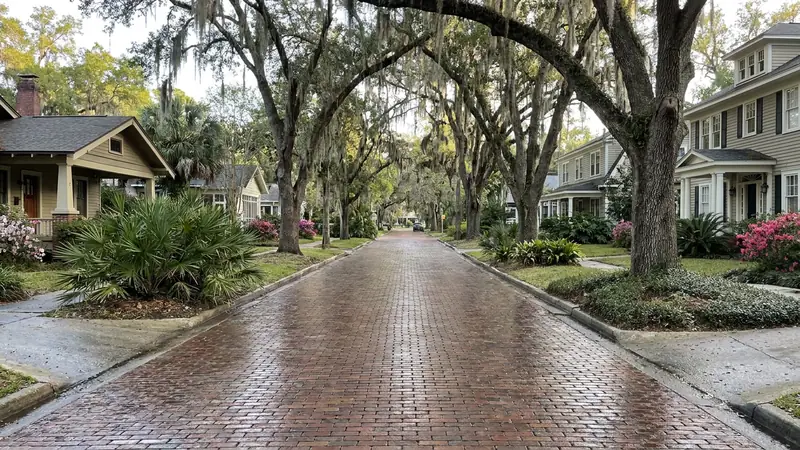
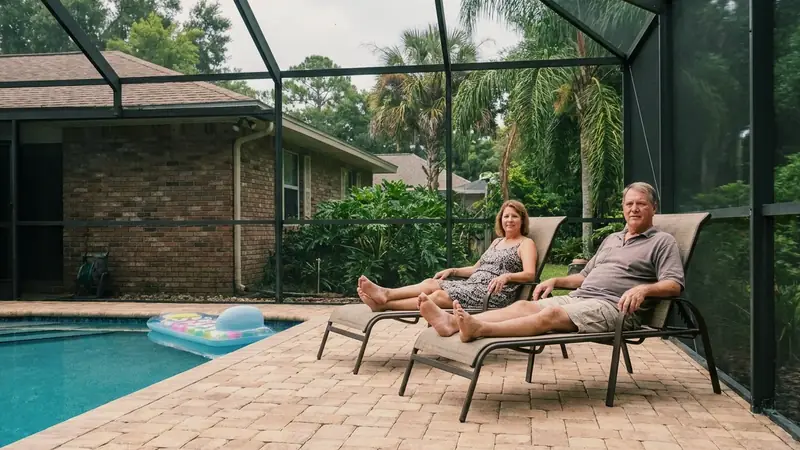
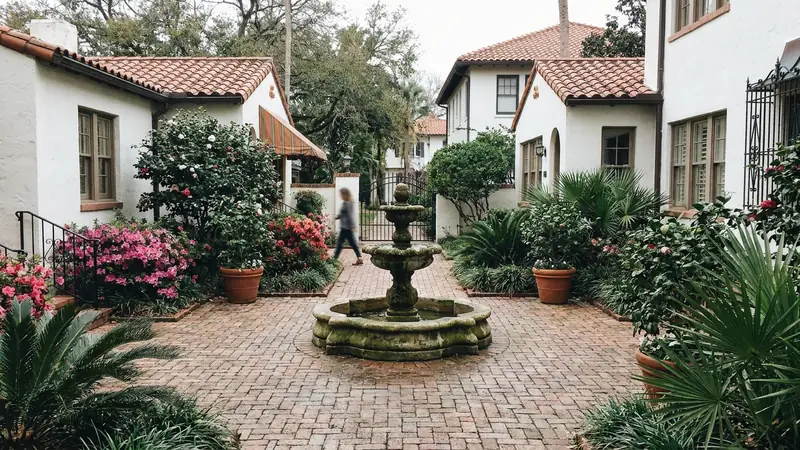
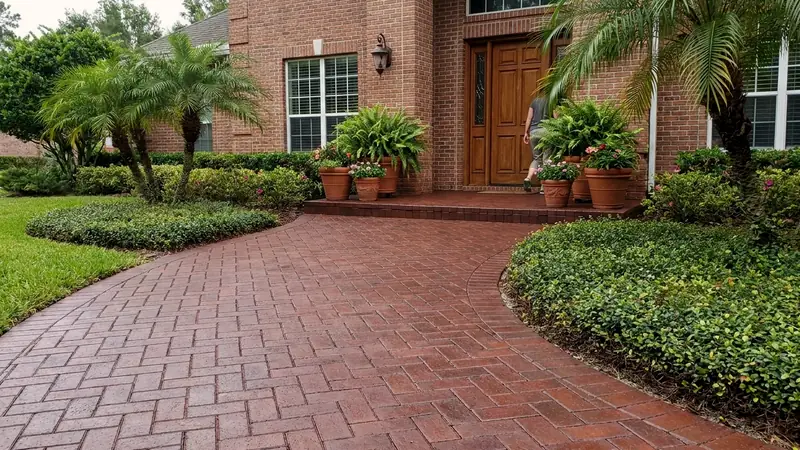
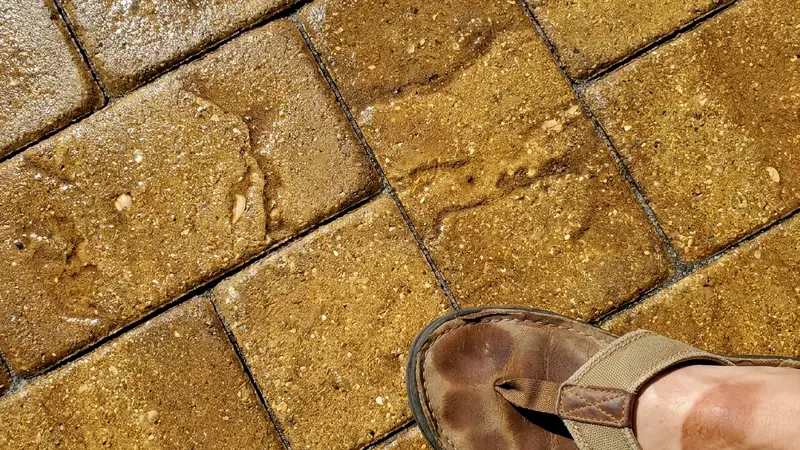
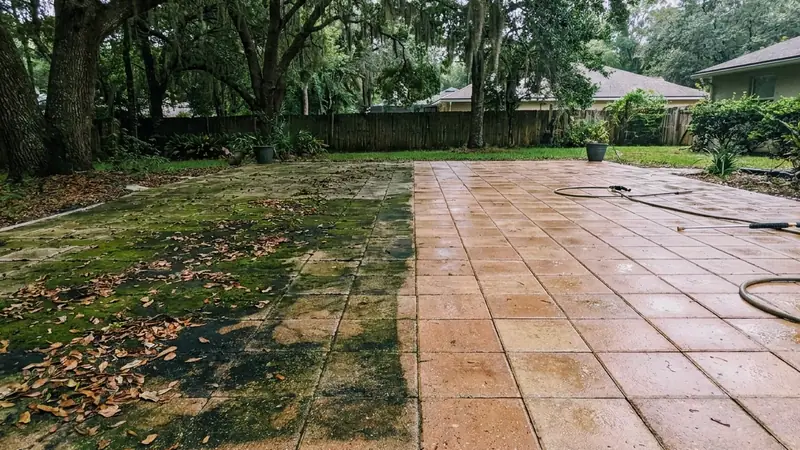
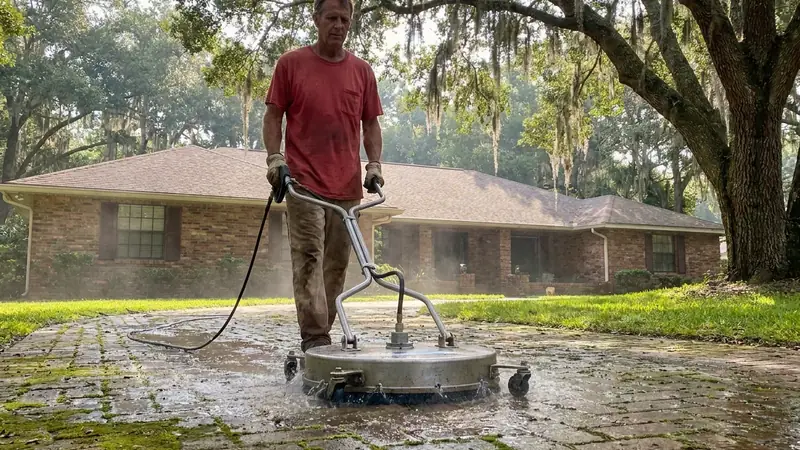
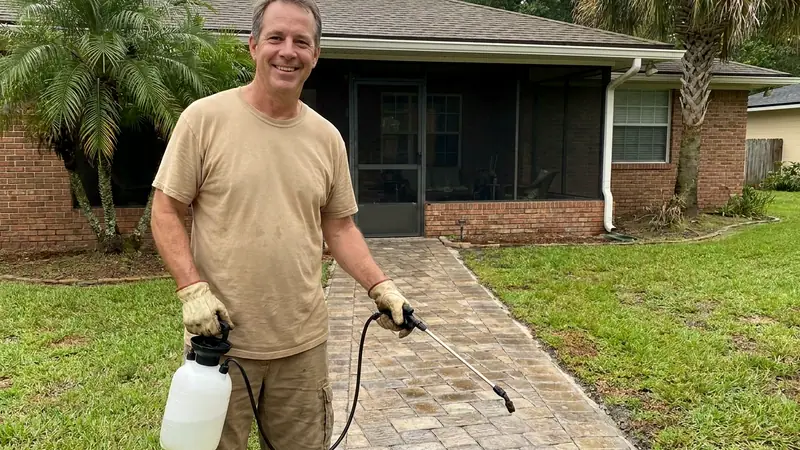
What do sealed pavers look like around Baymeadows?
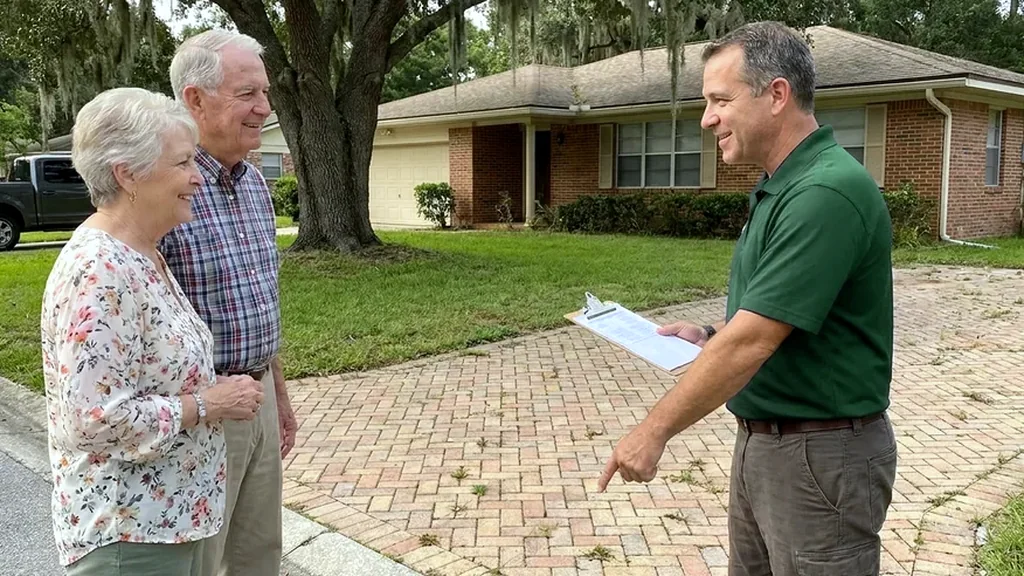
Why local matters in Baymeadows
Someone who works Baymeadows week after week knows the area holds many condos, townhomes and apartment buildings, so the first question is often who maintains the pavers. That answer changes who signs the estimate and who handles gate access, and someone from across town might not ask. For a contractor who already works the Southside, call (904) 569-7795.
Local knowledge also helps with the ground. Baymeadows was cut out of swampy land and has ponds and lakes, so a contractor here plans for slow drying and soft bedding sand. A job beside a pond may need another day to dry than one on a higher lot. To ask how the contractor would plan around that, ask for a free estimate.
Baymeadows also sits across both condo and HOA rules. Florida law says an association must apply its published guidelines evenly and put a denial in writing. A local contractor can tell you what finish usually passes without a fight. If your rules are unclear, ask for a free estimate and share what your documents say, with no obligation to hire anyone.
How did Baymeadows grow from a dirt road into a neighborhood?
It began as a rural road. In the early 1960s, reaching Deerwood meant a bumpy dirt road called San Clerc, which was later paved and renamed Baymeadows Road. Deerwood opened in 1960 with a country club and a gate, and its developers gave land for Southside Boulevard. If you live near that old route and want an estimate, ask for a free estimate.
The Baymeadows Golf Course opened in May 1968 on a 500-acre plan by designer Desmond Muirhead, and a golf writer said the course ran through swampy land. Deerwood Village at 9902 Baymeadows Road opened in 1972, and Publix was an anchor by 1974. Fort Family Regional Park, a 52-acre city park, sits just across Interstate 295 on Baymeadows Road East. Close to any of these spots, call (904) 569-7795 and give the contractor your street name.
Frequently Asked Questions
Is it good to seal pavers in Baymeadows?
Usually, yes. One St. Augustine company calls sealing optional but protective against stains, fading and erosion. In Baymeadows, where afternoon storms wash out joint sand, a coat also slows weeds and ants. Wet look scuffs show earlier than matte scuffs, which is worth weighing when you choose.
How much does it cost to clean and seal pavers in Baymeadows?
Expect to see $1.75 to $3.25 per square foot to clean, sand and seal in published rates around Northeast Florida. Small patios, tight access and failed old sealer push a Baymeadows job higher. Have the quote list the total square footage, then divide to check it against that range.
Why is paver sealing so expensive in Baymeadows?
Prep is where most of the money goes, not the sealer. Prep eats 2 to 3 hours for every hour of sealing, one Jacksonville company reports. Washing, re-sanding, drying time and stripping an old failed coat all take labor, which means a small Baymeadows patio costs more per foot than a big one.
What part of Jacksonville is Baymeadows?
You will find Baymeadows on Jacksonville's Southside, roughly 10 miles out from Downtown. Wikipedia describes it as a mix of business parks, retail and homes with ponds and lakes. Its boundary runs along Butler Boulevard, Interstate 95, Southside Boulevard and Interstate 295. Interstate 95 crosses the area at the Baymeadows Road interchange, and Deerwood Village at 9902 Baymeadows Road has stood there since 1972. Homes range from 1970s patio homes to later subdivisions on the old fairways.
Does my Baymeadows condo or HOA have to approve paver sealing?
It depends on who owns the pavers. In a condo, the association is responsible for common elements under Florida Statute 718.113, and a natural-look sealer is likelier to count as upkeep. An HOA has to apply its published rules evenly, and a denial must be in writing. Check your documents first. A gated community may also limit contractor hours, so ask about gate access when you book.
How soon can I walk or park on sealed pavers in Baymeadows?
Walking is usually fine after a few hours, and cars should wait about a day, one Jacksonville company says. A St. Augustine company quotes about 24 hours for feet and 48 for vehicles. Damp ground and shade can slow curing, so ask the contractor for a time that fits your own lot.
Can wet ground in Baymeadows delay paver sealing?
Yes, because sealer needs a dry surface and bedding sand under pavers can stay damp after rain. Baymeadows has ponds, lakes and low ground, so a patio near water may take longer to dry than a driveway on a rise. Sealing a damp paver is how hazy, white sealer happens.
How long does paver sealer last in Baymeadows?
Quotes usually land on two to five years between coats. Full sun and daily tires point toward the shorter end. A chalky feel or faded tone, plus joints that keep emptying after storms, point to a coat that is spent.
Nearby areas we serve
Ready for a Free Estimate in Baymeadows?
Call (904) 569-7795 and tell us about your pavers.
Free, no obligation