
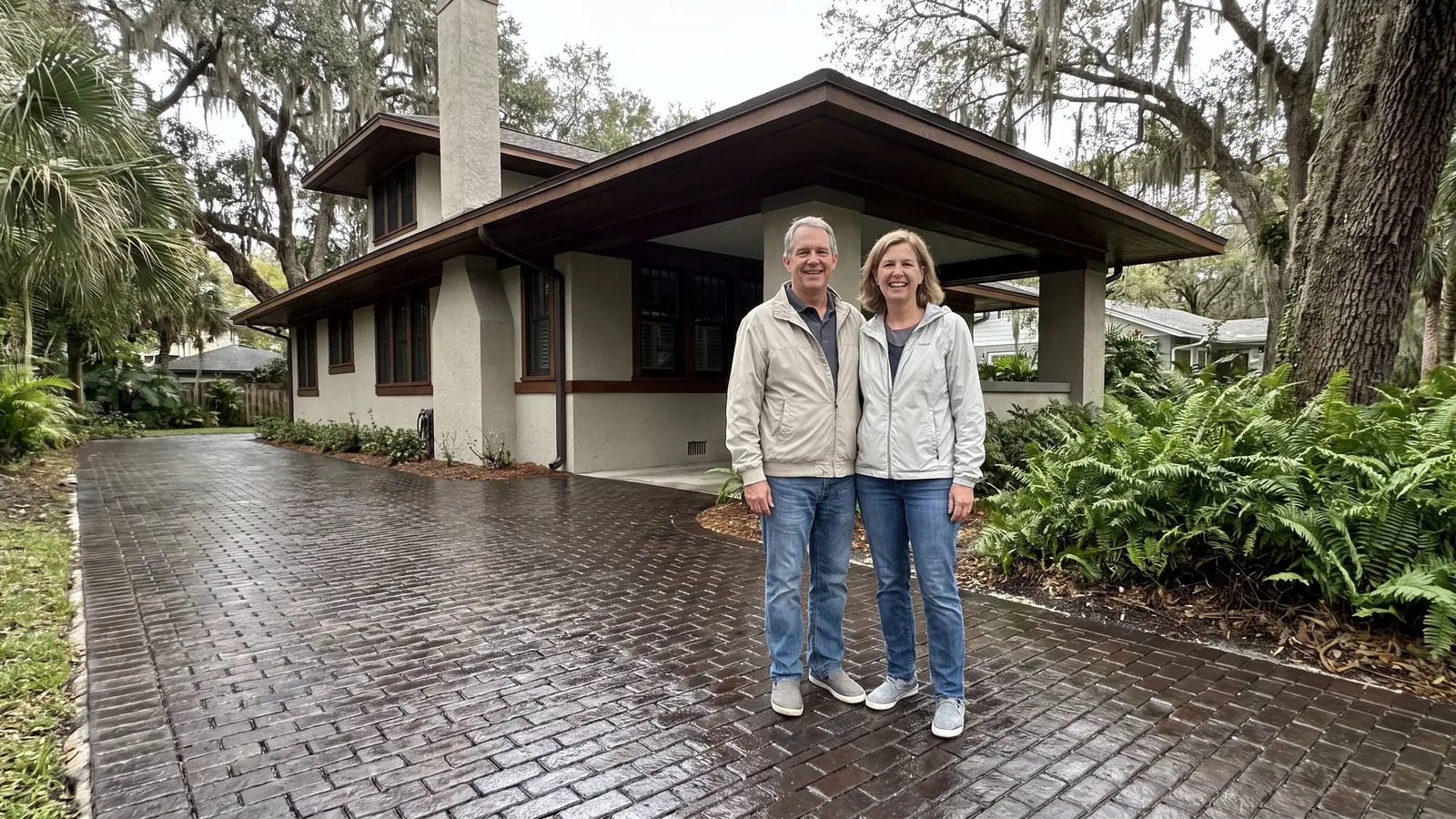
Paver sealing for Oceanway homes
Paver Sealing in Oceanway, FL
Oceanway grew from small farms into subdivisions, and a free paver sealing estimate is one call to (904) 569-7795.
- Brings out deeper paver color
- Fresh joint sand helps lock pavers in place
- Gives weeds less room to grow
- Makes the surface easier to keep clean
- Free estimate, no obligation
Request a Free Estimate
Free, no obligation.
Fast, careful paver sealing in Oceanway
Paver sealing is available across Oceanway, from the older streets near Oceanway Manor to the subdivisions that grew up around First Coast High School. A local contractor cleans, re-sands and seals driveways, walkways and patios, with a free estimate. Call (904) 569-7795 and a reply should come within 1 business day, often sooner than that.
Say your drive has an orange streak where the sprinkler spray lands and a green edge along the grass. A wash, fresh sand and a new coat can bring it back to one even tone. Tell the contractor what you see when you ask for a free estimate, and ask for a price before anything is agreed. There is no obligation to hire anyone.
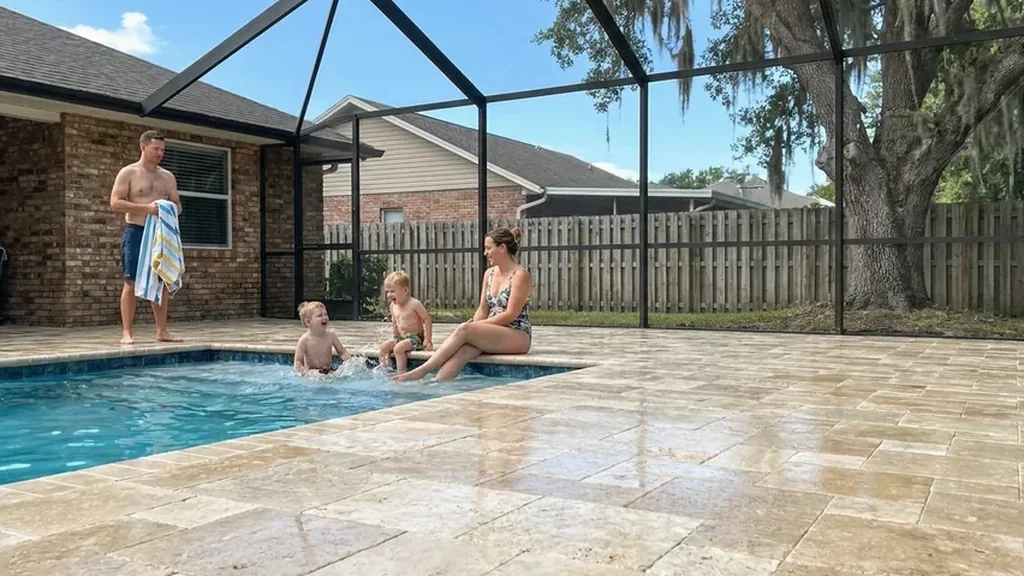
Why hire a local paver sealing contractor in Oceanway?
Oceanway Manor homes date from 1948 to 1999, and streets built after the early 1980s add more, so a local paver contractor has seen both older and later driveways. To start with a free look at yours, ask for a free estimate.
Free look at your lot
The contractor measures your Oceanway pavers and quotes a price at no charge. Nothing is agreed until you say so, and you can compare it with other bids.
Published prices to compare
Companies in this region commonly publish $1.75 to $3.25 per square foot to clean, sand and seal. Larger Oceanway drives often cost less per foot.
Rust marks get their own step
Orange marks from iron-rich sprinkler water are common in Florida. Tell the contractor where yours show up, and they are pretreated first, before the wash.
Your call on the finish
Matte, satin or wet look is your choice, and so is the date. An Oceanway estimate carries no obligation.
Get Your Free Estimate in Oceanway
Tell us about your pavers in Oceanway.
Free, no obligation
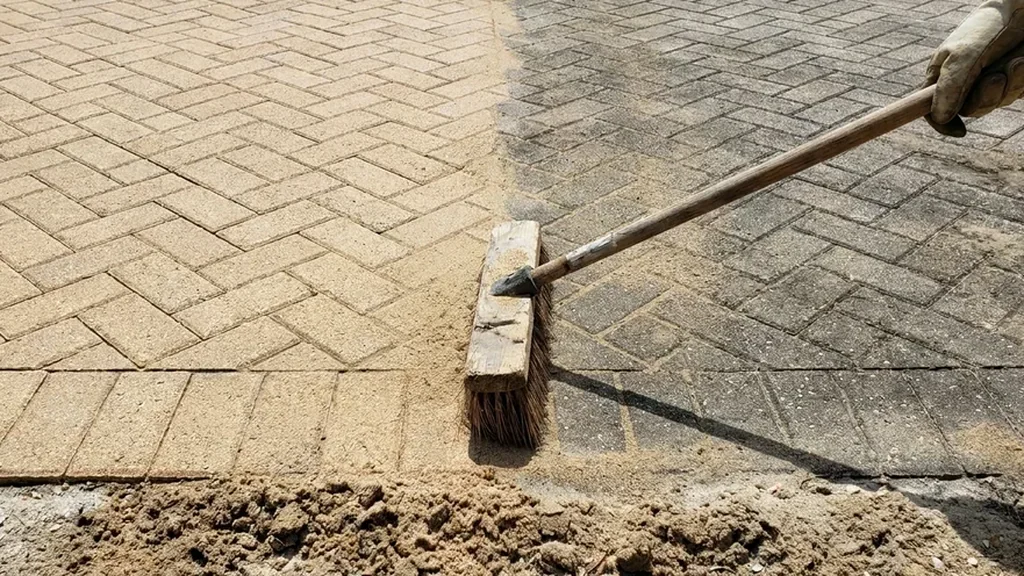
What paver problems show up most in Oceanway?
Orange streaks where sprinklers hit
Well water across Florida is mostly high in iron, according to UF/IFAS, and irrigating with it leaves orange stains on whatever the spray touches. If your Oceanway lot waters from a well, spray that crosses the pavers can leave rust marks along the edge. Sealer locks a stain in place, so rust is treated before any coat goes on. Some deep stains may not fully lift, and a contractor who sees the spot in person can say which kind you have. Rust marks usually trace a line along the sprinkler's reach, so the pattern on your drive tells the contractor where to look first.
Sandy ground that lets pavers sink
The USDA's Mandarin soil series, first described in Duval County, is a deep fine sand with a seasonal water table 18 to 42 inches down. Annual rain in Jacksonville averages near 52 inches, and hard summer downpours bring much of it. One local sealing company says sinking and washouts are the main reason pavers fail. Low spots are reset first, since sealer would lock in the dip. That repair is part of the estimate, so ask about it. A level surface also sheds water better after the next storm. With a seasonal water table 18 to 42 inches down, the ground can stay wet below a surface that looks dry.
Damp air near the Northside marshes
Oceanway is a Northside neighborhood, and the Timucuan Preserve across northeastern Duval County covers 46,000 acres of wetlands and waterways in northeastern Duval County. Moss and algae settle in mostly where thick shade keeps pavers wet. A shaded walkway or north-facing patio can turn green while the open drive stays clean, and the green tends to return where air barely moves. Green growth is washed off before the coat goes on, so the sealer bonds to clean stone and not to a film of algae. A landscape guide says moss, lichens and algae should not grow on pavers unless the area is heavily shaded, so green on an open drive points to irrigation or another source of moisture.
An old coat nobody can name
Oceanway Manor homes were built from 1948 to 1999, so pavers added over those decades may carry sealer from more than one owner, or none at all. Water-based sealer does not go over a solvent-based coat. One Jacksonville company says pavers sealed before with an oil-based product must be stripped first, about 10 to 20 percent of its jobs. Stripping adds time and cost, which is why the contractor needs to know the history before quoting. Oceanway Manor dates to 1958, so a patio added by an earlier owner may have had several coats by now.
Fade across a long run of pavers
Open drives and walkways take sun from sunrise to dusk, and a long drive means a lot of surface for the sun to work on. Sun fades unsealed pavers, a Jacksonville company says, and a color-enhancing product brings the shade back. Oil drips and tire marks add dark spots near the garage. Wash first, then seal, so the stains are not trapped under the coat. A fresh coat also makes the next wash easier, since dirt sits on top. Tannins from oak leaves and rust from irrigation also stain drives, according to one Jacksonville company, so a faded surface often carries stains too.
What do Oceanway's older and newer streets mean for paver sealing?
Why do Oceanway Manor pavers and newer ones start differently?
They mean two different starting points. Oceanway Manor dates to 1958, and its single-family homes were built from 1948 to 1999, so some pavers there have had decades of weather. Streets such as Moby Dick Drive, Shamrock Avenue and Collen Road sit in that older part, and homes there run from about 1,100 to 2,100 square feet. Tell the contractor your street when you ask for a free estimate.
How did growth since the 1980s change Oceanway driveways?
Growth since the early 1980s changed the area. Wikipedia says Oceanway was once dotted with small farms and isolated houses, then added many neighborhoods and schools, with First Coast High School the first high school here. Pavers on your street may be a few years old or a few decades old. Call (904) 569-7795 and say roughly when yours were laid.
What should you ask an Oceanway HOA about pavers?
Many Oceanway subdivisions have homeowners associations. An HOA can only enforce what its own papers say, so ask for the page that covers paver finish. A Southside paver page adds that a natural-look sealer is likelier to count as upkeep. Read your rules first, then ask for a free estimate.
What does paver sealing cost in Oceanway?
What do posted rates cover for an Oceanway job?
Rates posted by companies in this region come to $1.75 to $3.25 per square foot, covering the wash, sand and sealer. A longer drive raises the total, but prep time does not scale with area, so larger jobs often cost less per foot than small patios. To price your driveway, ask for a free estimate.
Which three things move an Oceanway quote?
Three things move an Oceanway quote. Failed old sealer has to be stripped, which costs extra, and rust marks need their own treatment. Joints that lost most of their sand need more sand and more time, and tight corners add hand work. Call (904) 569-7795 to talk through which of these apply.
| Paved area | Typical example | Clean, sand and seal |
|---|---|---|
| 300 sq ft | Small patio or walkway | $525 to $975 |
| 600 sq ft | Two car driveway | $1,050 to $1,950 |
| 1,000 sq ft | Large driveway or pool deck | $1,750 to $3,250 |
| 1,500 sq ft | Driveway plus pool deck | $2,625 to $4,875 |
Math based on the $1.75 to $3.25 per square foot that Northeast Florida paver companies publish. Your contractor sets the actual price after seeing the surface. Repairs, leveling and stripping failed sealer are usually extra.
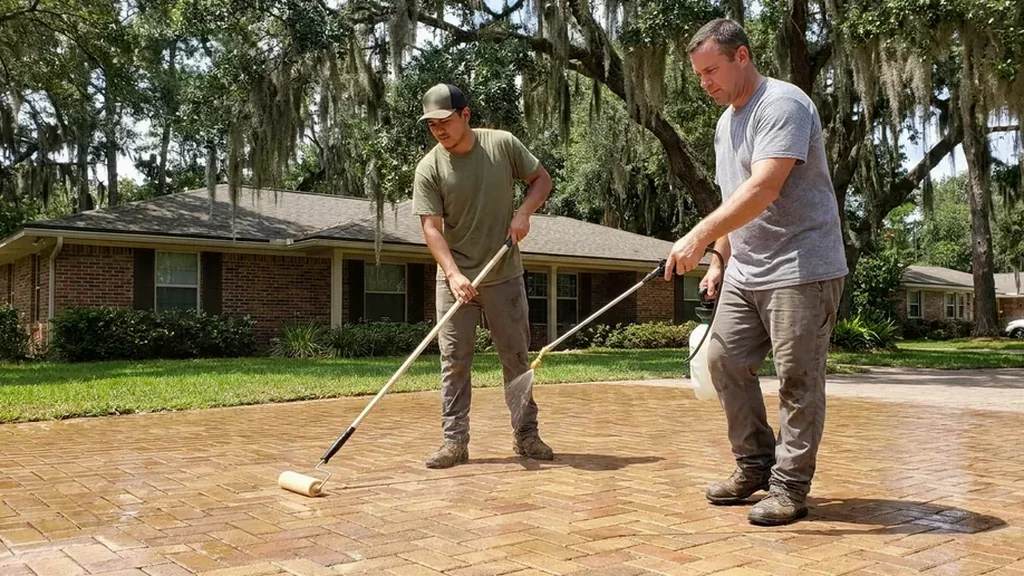
How does a paver sealing job work in Oceanway?
Look over the lot and the sprinklers
The contractor walks your Oceanway drive and notes sunken spots, rust marks and where sprinkler heads throw water. Settled or lifted areas are reset first, because sealing keeps whatever is under it, and a coat over a dip only preserves the dip. Notes on the quote should say where those spots are. A past coat matters, since it limits which new sealer can go down. A Surebond bulletin says irrigation should be off while the sealer sets. The contractor may ask where the irrigation lines run and which zones touch the pavers, so those zones can be turned off on the day.
Treat rust, then wash
Rust and oil spots are pretreated, and the wash then lifts algae, dirt and tire marks. On a long Oceanway drive this can be the longest stage, since every foot gets the same care. A trade supplier warns that heavy pressure above 3,000 PSI can strip standard concrete pavers, so the pressure stays moderate. Some stains may not come out fully, and a good contractor says so up front. Where an Oceanway lot has a well, a rust line along the edge of the drive is common, and it is the first spot to be treated.
Pack new sand into the seams
Washing pulls out joint sand, and Oceanway's sandy ground and summer storms make joints a weak point. Sand that is packed well holds longer between coats. The contractor sweeps in fresh sand and packs it down, then sweeps the surface clean. Weeds and ants move into empty joints, and filling them closes that door. Sand colors can be matched to the pavers, and the surface is swept clean so no loose sand sits on top of the sealer. Jacksonville soil is mostly sand and clay rather than limestone, and heavy summer rain moves sand easily.
Give it a full dry stretch
Sealer needs a dry surface. Surebond says most of its sealers need a full day to dry after cleaning or rain, and another 24 hours of dry weather once applied. Afternoon storms can move a date, since the wet season brings more than half of the year's rain. A rescheduled day is better than sealing over moisture. Fall is the preferred season for the work because it is drier, one company says, and November through April is the driest stretch.
Seal and let it cure
Sealer is sprayed on and back-rolled, then left alone. Pavers that were never sealed may get a second coat, as one Jacksonville company does. A Jacksonville sealing company lists 2 to 4 hours for foot traffic and 24 hours for cars. Keep the sprinklers off until the contractor says they can run again. Ask for the product name, and file it with your house papers for the next coat. Thin coats work better than heavy ones, since sealer laid on too thick can turn white or cloudy.
Complete paver services in Oceanway
In what order does an Oceanway job run?
An Oceanway job follows four steps in order. Rust and stains get treated, the pavers are washed, the joints are refilled, and sealer goes on once everything is dry. That order keeps dirt from being sealed in. To learn how long it takes on a long drive, call (904) 569-7795.
Where do Oceanway pavers wear differently?
Driveways here take tires, oil drips and sprinkler spray. Walkways to the front door and back patios see less traffic but can stay damp in shade, which is where algae shows up, and garage aprons wear first. One Jacksonville pricing guide says pool decks often get a penetrating sealer to keep traction when wet. Mention each surface when you ask for a free estimate, including steps and any edging.
How do you choose matte, satin or wet look?
Choosing a sealer means answering two questions. Is the old coat water-based or solvent-based, and do you want matte, satin or wet look? A wet look deepens color but shows scuffs sooner, while matte keeps the natural tone. Call (904) 569-7795 to talk about which suits the color of your pavers.
When does the weather allow sealing here?
Timing follows the weather. Jacksonville's rain is concentrated from May through September, and one company says fall is the preferred season because it is drier. Companies commonly quote two to five years between coats, and a sunny drive may want its next coat sooner than a shaded walk. Ask for a date in a drier month when you can, and ask for a free estimate to see what the schedule allows.
Questions to ask before you hire
- How many hours until bare feet and paws are safe on the finished surface?
- What is the next step if the finish looks cloudy a week later?
- Who handles low spots where the pavers have settled?
- Will my red and tan pavers keep their natural tone after sealing?
- Can you put a small sample patch down before the whole driveway gets sealed?
- What keeps the mulch, ferns and potted palms at the edges from getting splashed?
- Do I get before and after photos once the job is done?
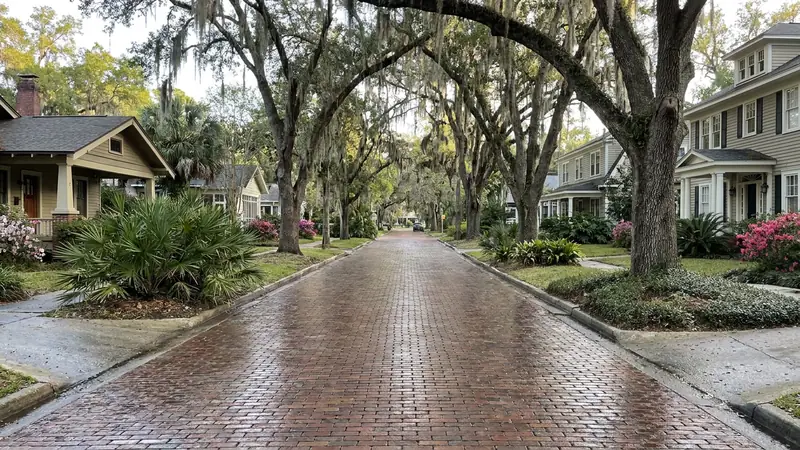
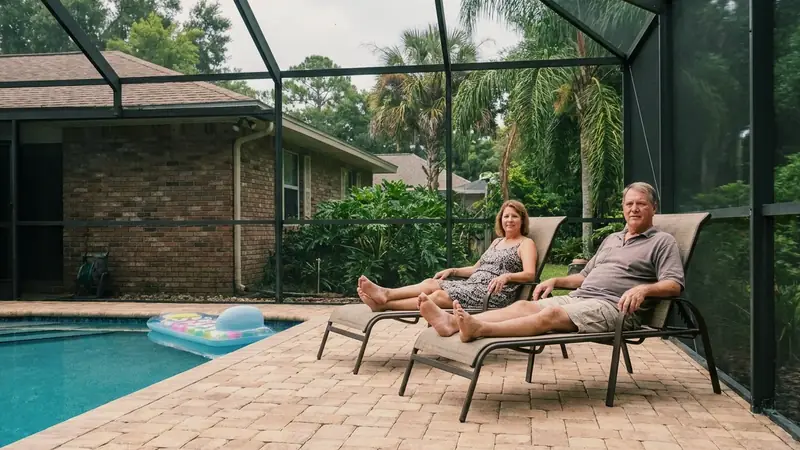
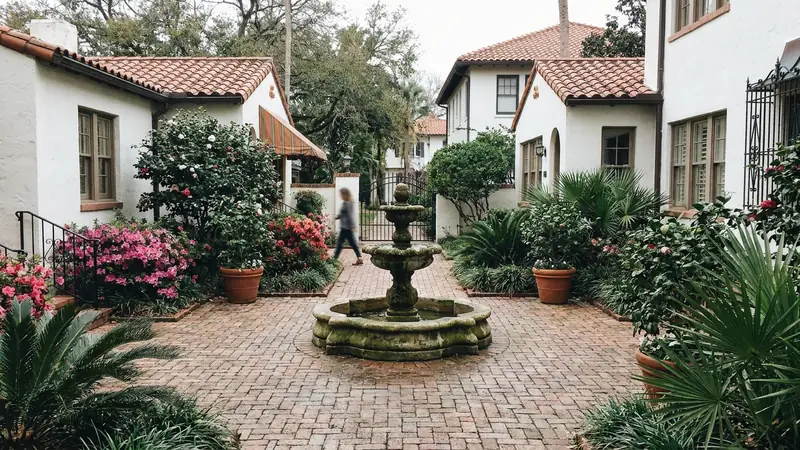
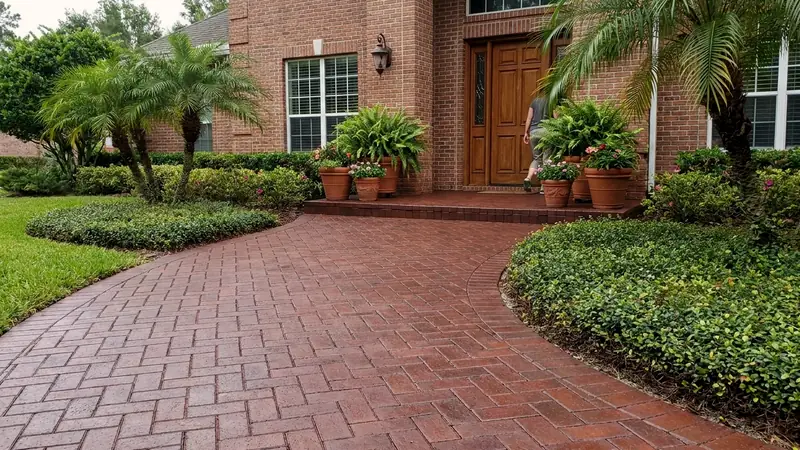
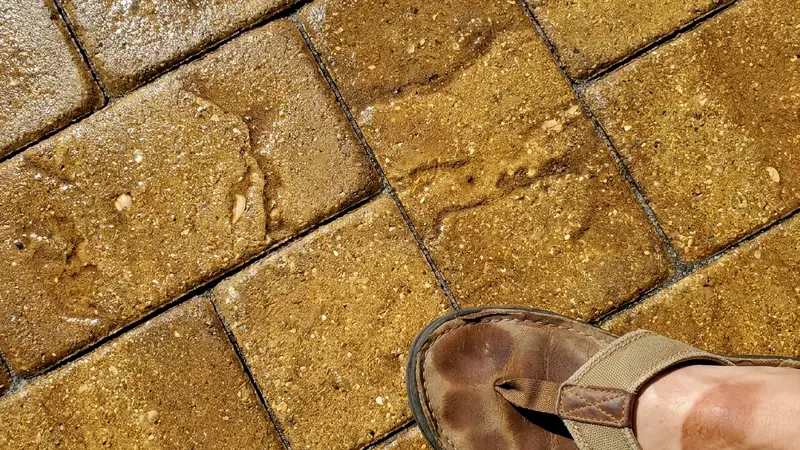
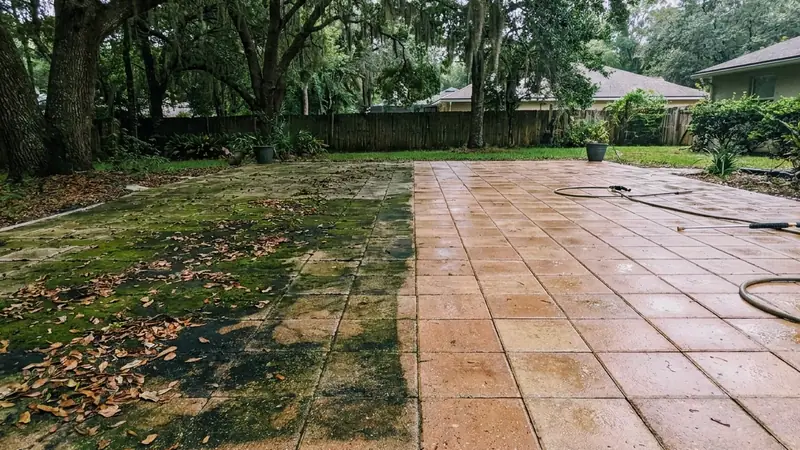
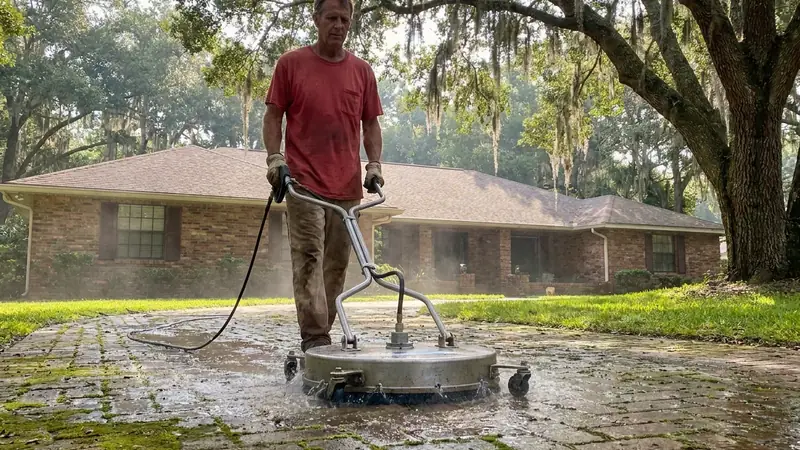
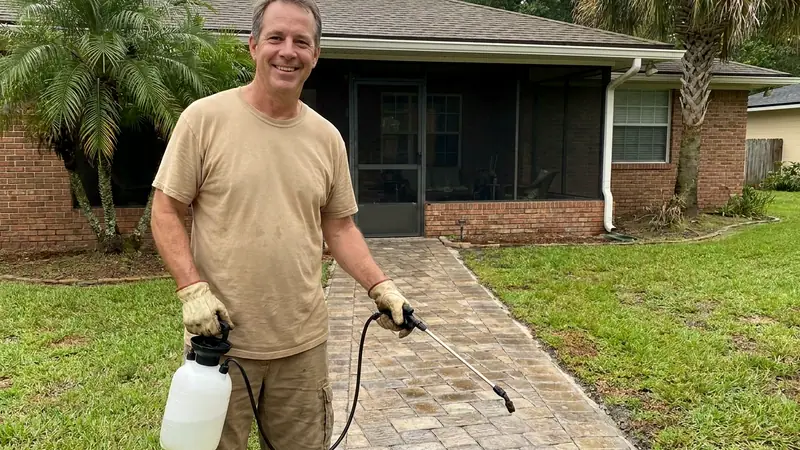
What do sealed pavers look like around Oceanway?
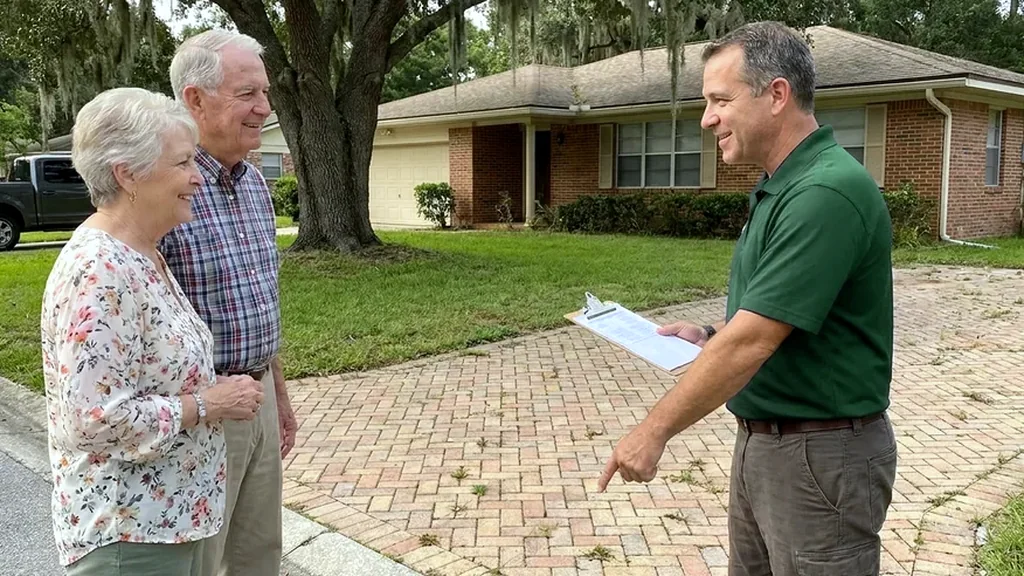
Why local matters in Oceanway
Why does a Northside contractor matter here?
A contractor based on the Northside knows the area is wide and spread out, so long driveways and travel time shape a day's work. They also know to ask about wells and sprinklers, because iron in irrigation water leaves orange marks. Someone who only works the Southside may not think to. To reach a contractor who covers the Northside, call (904) 569-7795.
How do storms and sandy ground change the day?
Local experience helps with timing. Jacksonville's summer storms are brief but intense, and Oceanway's sandy ground, with a water table that can sit 18 to 42 inches down, can hold water after they pass. A contractor from here knows to check the low corners of a drive first, and to look at where runoff from the roof lands. You can ask for a free estimate and ask what happens to the job dates if several rainy days stack up.
Do mixed home ages change the paver job?
Mixed ages matter too, and pavers are no exception. Oceanway has homes from the 1948 to 1999 range around Oceanway Manor and growth that kept coming after First Coast High School opened in 1990. A local contractor has seen both older and later pavers and knows an older coat may need stripping before anything new goes on. If your pavers are on the older side, ask for a free estimate and mention when the home was built.
What was Oceanway like before the subdivisions arrived?
What was Oceanway before the subdivisions?
Mostly farm country. Wikipedia says the area was once dotted with small farms and isolated houses, and it has grown sharply since the early 1980s. First Coast High School opened in 1990 as the first high school in the area, built around a large paved courtyard in a colonial Latin American style. If you live near the school and need an estimate, ask for a free estimate.
Which landmarks mark Oceanway?
River City Marketplace, a 125-acre shopping district, sits on the east side of Interstate 95 and opened in 2006. Yellow Bluff Fort Historic State Park, a Confederate camp from 1862, is on New Berlin Road near the mouth of the St. Johns River. Pumpkin Hill Creek Preserve State Park, about 12 miles north of Jacksonville, sits west of Big and Little Talbot Islands. Around any of these Oceanway landmarks, call (904) 569-7795 and name your street.
Frequently Asked Questions
Is it good to seal pavers in Oceanway?
In most cases, yes. A coat locks in joint sand, which slows weeds and ants, and it keeps oil and dirt sitting on top instead of soaking in. In Oceanway, where summer downpours wash sand out of unsealed joints, that matters. A wet look shows scuffs sooner than matte, so choose with that in mind. It also makes a driveway easier to rinse, since dirt sits on the surface.
How long do paver sealers last in Oceanway?
Going by what companies quote, plan for two to five years between coats. Full sun and daily tires push an Oceanway driveway toward the short end. One Jacksonville company says water that beads means the sealer still works, and water that soaks in fast means it is time for a fresh coat.
How much does it cost to seal outdoor pavers in Oceanway?
Budget $1.75 to $3.25 per square foot for the wash, new sand and sealer, the range posted by companies in this region. Old sealer that needs stripping, rust stains and lost joint sand push a price higher. Make sure the quote shows total square footage so the math is easy to check.
Is it better to spray or roll paver sealer in Oceanway?
Pros typically do both. They spray the first coat and then back-roll it so the sealer reaches into the joints and evens out. A trade supplier recommends that two-step method for most pavers. Ask the contractor how the coat will be applied and which product goes on.
Why is paver sealing so expensive in Oceanway?
The sealer is the smaller part of the bill, and prep is the bigger one. A Jacksonville sealing company counts 2 to 3 hours of prep for every sealing hour. Washing, rust treatment, new joint sand and drying time all take labor, and stripping an old failed coat adds more. Larger Oceanway drives often cost less per foot than small patios, because prep time does not scale with the area.
Can well water or sprinklers stain pavers in Oceanway?
Yes, if the water carries iron. Iron is common in Florida well water, UF/IFAS notes, and spray from an irrigation system that uses it leaves orange marks. Rust spots are pretreated before sealing, and some deep stains may not lift fully. The contractor can tell you after seeing the spot. Turning off the sprinkler zone on sealing day also helps, since irrigation should be off while the sealer sets.
How long should I wait before sealing brand new pavers in Oceanway?
Wait about 30 to 90 days after installation. Jacksonville and St. Augustine companies say this gives moisture time to escape and lets white haze, called efflorescence, surface so it can be treated first. Sealing too early can trap it. If your Oceanway pavers are freshly laid, ask the contractor when to book.
How soon can I drive on a freshly sealed driveway in Oceanway?
Plan on about a day. One Jacksonville company says its sealer needs 24 hours before cars and 2 to 4 hours before foot traffic. Another says cars should stay off about a day. Damp weather can stretch that, so ask the contractor for a time that fits your lot.
What is the per square foot rate for paver sealing in Oceanway?
Companies in Northeast Florida publish $1.75 to $3.25 per square foot to wash, sand and seal pavers. On a 600 square foot Oceanway driveway that works out to about $1,050 to $1,950. A long drive to a lot on the north side can add to the total, and stripping a failed old coat costs extra.
Does sealing keep weeds out of the joints on Oceanway pavers?
It cuts them back, though it is not a permanent block. Sealer helps hold joint sand in place, and joints packed with sand leave seeds little room to root. Weeds that already have roots are pulled during the wash, and the joints are refilled before the coat goes on. Sand that drains away over the years will let weeds return.
Nearby areas we serve
Ready for a Free Estimate in Oceanway?
Call (904) 569-7795 and tell us about your pavers.
Free, no obligation