
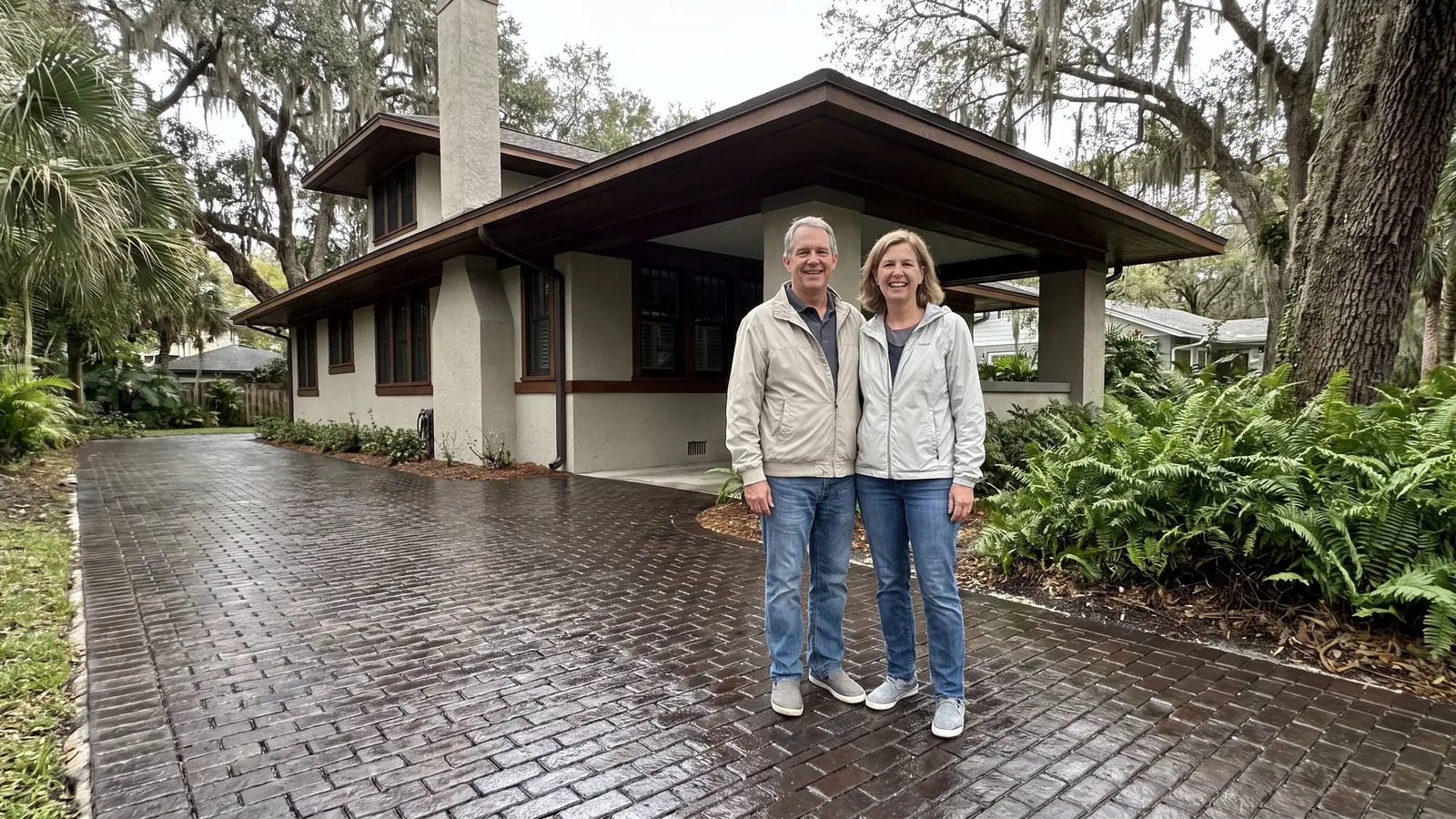
Paver sealing for San Marco homes
Paver Sealing in San Marco, FL
Larger San Marco lots mean longer walks to keep tidy; call (904) 569-7795 for a free paver sealing estimate.
- Brings out deeper paver color
- Fresh joint sand helps lock pavers in place
- Gives weeds less room to grow
- Makes the surface easier to keep clean
- Free estimate, no obligation
Request a Free Estimate
Free, no obligation.
Fast, careful paver sealing in San Marco
Paver sealing is available in San Marco, from the streets around the Square to Colonial Manor and South Riverside, and the estimate is free. The work covers driveways, front walks, courtyards and pool decks, each washed, re-sanded and sealed by a local contractor. Use ask for a free estimate, and the reply arrives within 1 business day, usually much sooner.
San Marco was laid out with winding streets and larger lots, so a front walk here tends to be one people notice. Faded color, green film and thin joints show up fast on a path like that. A wash, fresh sand and an even coat give it back a clean, finished look. To talk through your surfaces, call (904) 569-7795.
Why hire a local paver sealing contractor in San Marco?
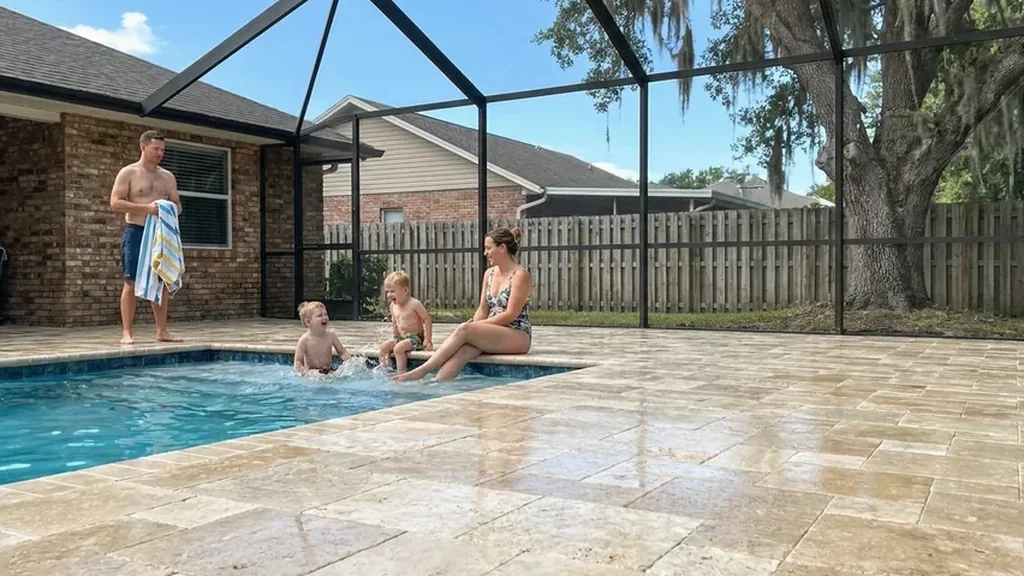
San Marco blends homes of many styles with big shade trees and parks, so a paver job here is rarely a copy of the one next door. To hear how that plays out on your lot, ask for a free estimate.
A free walk-through
A contractor inspects your San Marco pavers for free and puts a price in writing before you commit.
A range for comparison
Regional companies post $1.75 to $3.25 per square foot for a full clean, sand and seal. Check any San Marco bid against it.
Care near old brick
Older clay brick can need a different sealer than concrete pavers. Ask the contractor how mixed surfaces are handled.
You stay in control
Pick the finish, the date and whether to go ahead. A San Marco estimate carries no obligation.
Get Your Free Estimate in San Marco
Tell us about your pavers in San Marco.
Free, no obligation
What paver problems show up most in San Marco?
A walk that is half sun, half shade
San Marco has fourteen parks and many oaks, so a longer front walk may pass from full sun into deep shade. Sunlit stone fades in a few years, while the shaded end stays damp and turns green. The two halves age differently, which is why the walk can look striped. A wash and an even coat bring them back into line, and sealer slows the fading on the sunny half.
Clay brick sitting beside concrete pavers
The brickyard that dug Marco Lake made 50,000 bricks a day by 1923, so brick has deep roots here, and a walk or border near an older home may be brick. A regional paver company says old clay brick wants a breathable penetrating sealer, because a film can hold moisture and cause flaking. Concrete pavers next to it may want a different product. Point out every surface at the first visit. A mixed border of brick and concrete is common, and the contractor can plan around it.
Leaves packed into the joints
Large magnolias and oaks shade Landon Park, and Largo Well Park has a live oak and a magnolia canopy at either end. Trees like these drop leaves that settle in paver joints and hold water. Damp joints grow algae faster, and weeds follow. The contractor clears the joints before any new sand goes in. A quick sweep between visits keeps the leaves from building up again.
Several decades of coats and repairs
A subdivision such as Alexandria Place has a median build year of 1939, and a house that old can have had many owners. Each may have patched the paving or put down a different sealer. Nothing water-based can go over a solvent-based coat. The contractor identifies what is there before choosing the next coat. If the old film is flaking, expect it to be stripped first.
White haze rising through the stone
Unilock describes efflorescence as a white mineral haze that rain alone may not remove. It does not weaken concrete pavers, but sealer must not go over it. A brick maker warns that damp, dirty or hazy surfaces get locked in permanently under a coat. If your San Marco walk has chalky patches, the haze is treated first. Ask the contractor to show you where it is before the wash.
Do bigger San Marco lots mean bigger paver bills?
Often the paved area is larger, though the price per square foot can be lower. San Marco follows the City Beautiful plan, with winding streets, planted medians, parks and larger lots rather than a grid. A Jacksonville cleaning company explains that bigger jobs spread setup time over more surface. Measure your walk, drive and patio, then ask for a free estimate.
Colonial Manor and South Riverside are neighborhoods within San Marco, according to Wikipedia. Alexandria Place, nearby, has a median build year of 1939. Houses from that era may have brick or stone near the paving, so rinse water must be kept off old mortar. Call (904) 569-7795 and tell the contractor what your walls are made of.
Planted medians and parks give San Marco a leafy look, and that leaf cover shapes the work. Shade slows drying, and sealer must go on a dry surface, typically 24 to 48 hours after cleaning. A shaded courtyard may need a longer wait than a sunny drive. When you are ready, ask for a free estimate and mention how much shade your pavers get.
What does paver sealing cost in San Marco?
Posted prices in Northeast Florida for a clean, sand and seal run $1.75 to $3.25 per square foot. A large San Marco walk plus drive plus patio, measured together, tends to sit lower in that range, since bigger jobs cost less per foot. A single courtyard sits higher. The estimate is free, so ask for a free estimate for a price tied to your surfaces.
Prep drives much of the cost, since one local company spends two to three hours of prep for every hour of sealing. Brick work, mildew removal and stripping old film move the price more than the sealer itself does, one paver company says. Tight gates and planted borders add time as well. Call (904) 569-7795 and describe your lot so the number is close to final.
| Paved area | Typical example | Clean, sand and seal |
|---|---|---|
| 300 sq ft | Small patio or walkway | $525 to $975 |
| 600 sq ft | Two car driveway | $1,050 to $1,950 |
| 1,000 sq ft | Large driveway or pool deck | $1,750 to $3,250 |
| 1,500 sq ft | Driveway plus pool deck | $2,625 to $4,875 |
Math based on the $1.75 to $3.25 per square foot that Northeast Florida paver companies publish. Your contractor sets the actual price after seeing the surface. Repairs, leveling and stripping failed sealer are usually extra.
How does a paver sealing job work in San Marco?
Walk the whole property
The contractor looks at every paved surface, front to back, and notes brick, concrete and stone. Each material may need its own cleaner and sealer, so a mixed courtyard can take a little longer to plan. Lifted edges and loose stones get marked, along with any shaded damp spots. Before a date is set, you receive a list of what will be done. Mention any surface you are unsure about, since the contractor can test it.
Wash at a safe pressure
The wash lifts leaf stains, green film and ground-in dirt from both the surface and the joints. Trade advice is to stay below 3,000 PSI on standard concrete pavers, since more can strip the surface. Old brick gets a gentler hand, and rinse water stays off mortar, wood trim and any painted trim near the work. White haze is treated at this stage. Stubborn spots get a second, gentler pass rather than more pressure.
Clear and refill the joints
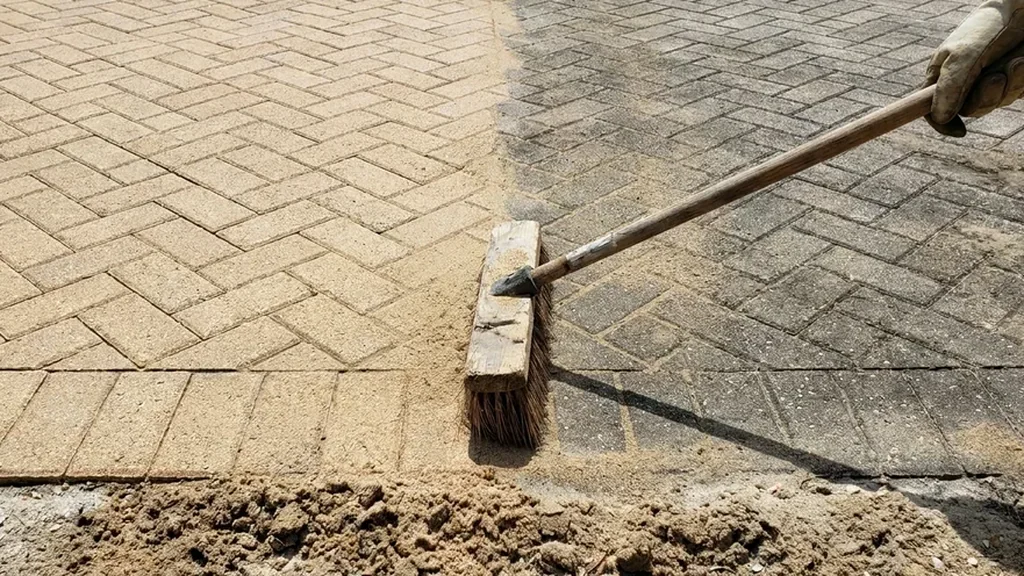
Leaves and old sand come out of the joints, and fresh sand goes in. Full joints stop weeds and keep pavers from shifting, and they give the sealer a firm edge to hold. The extra sand is swept off the face so it does not mark the finish. Low joints near a tree trunk may need a second pass. Any edging that has moved is reset before the sand goes in.
Let everything dry
One local page wants pavers fully dry before sealing, usually 24 to 48 hours after the wash. Sealing damp stone causes white or blotchy results, which is why a patient contractor is a good sign. In the shade of San Marco's oaks, that wait can run longer. Both the stone and the forecast are checked before sealing starts. If the weather turns, the job simply moves to the next clear day.
Seal with the right product
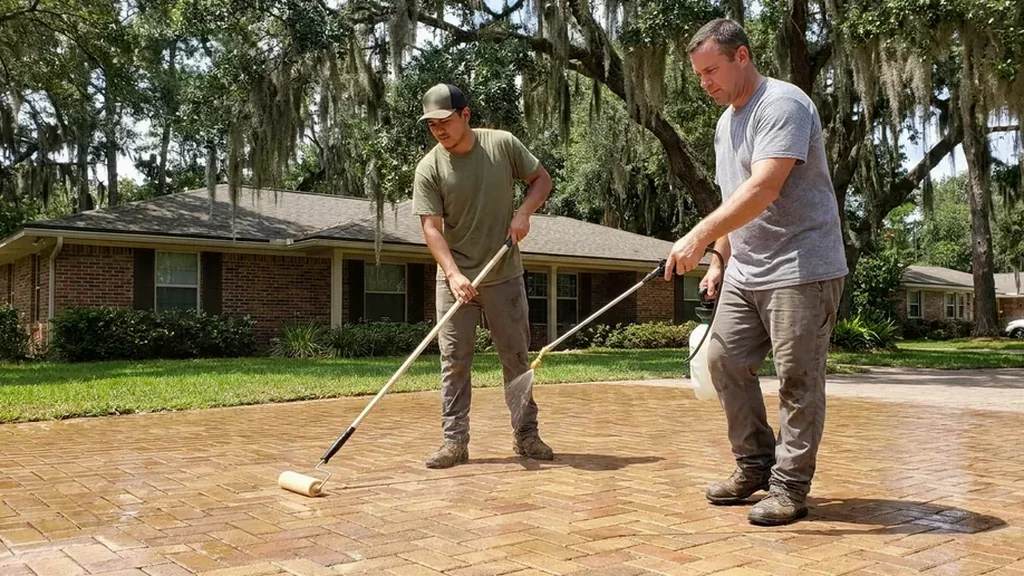
Film sealers can be matte, satin or wet look, and a penetrating sealer leaves the look almost unchanged. The coat goes on with a sprayer and then a back-roll, for even coverage. Feet can use the surface in 2 to 4 hours, and cars need 24 hours, one company says. Get the product name written down before the crew leaves. Keep it for the next coat so the same type goes on.
Complete paver services in San Marco
A San Marco job follows a firm order: wash, clear the joints, re-sand, dry and seal. The order protects the finish, since sealer goes on only after the stone is clean and full of fresh sand. A small courtyard may be done in a day, and a long drive with a walk may take two. To ask about yours, call (904) 569-7795.
Driveways, front walks, courtyards, pool decks and garden paths all turn up in older neighborhoods like this one. Each wears differently, with tires on the drive, shade on the courtyard and sun on the deck. The contractor prices each by its square footage. Name your surfaces when you ask for a free estimate.
Sealer choice is the biggest decision after the wash. A film sealer adds a matte, satin or wet look, while a penetrating sealer leaves the stone looking almost unchanged. Old clay brick does better with the breathable kind, a paver company says. Call (904) 569-7795 to talk through your finish.
Rain falls mostly from May through September in short, hard storms, and November through April is driest. Scheduling in the cooler, drier stretch is usually simpler for a San Marco job. Shade and the river's damp air can still stretch drying time. For a date that fits, ask for a free estimate.
Questions to ask before you hire
- Do the lights and sprinkler lines set in my pavers get covered or avoided?
- Can you put a small sample patch down before the whole driveway gets sealed?
- Who handles low spots where the pavers have settled?
- Is the product made to hold up around a pool where the deck stays wet?
- Will my red and tan pavers keep their natural tone after sealing?
- Will the joints get topped up with sand before the sealer is applied?
- What keeps the mulch, ferns and potted palms at the edges from getting splashed?
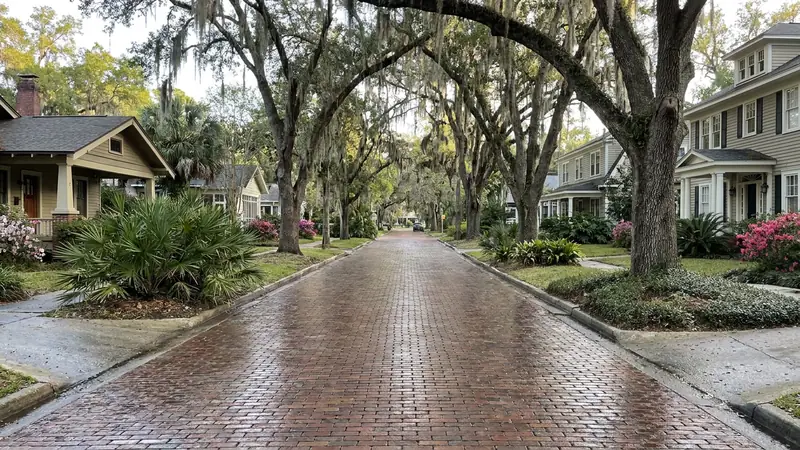
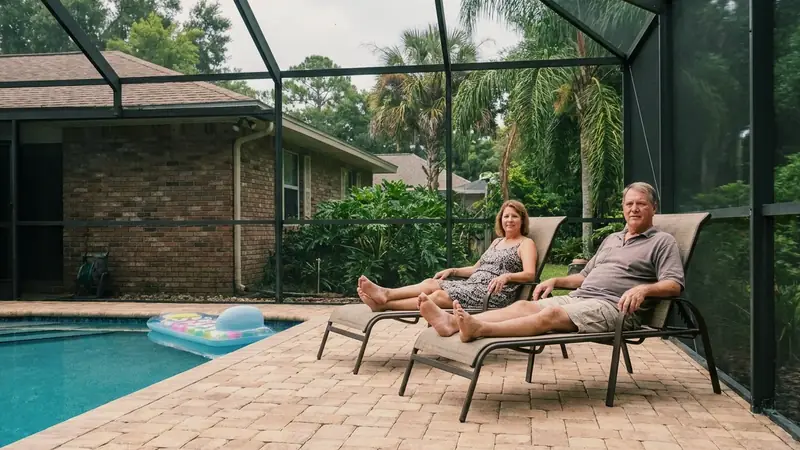
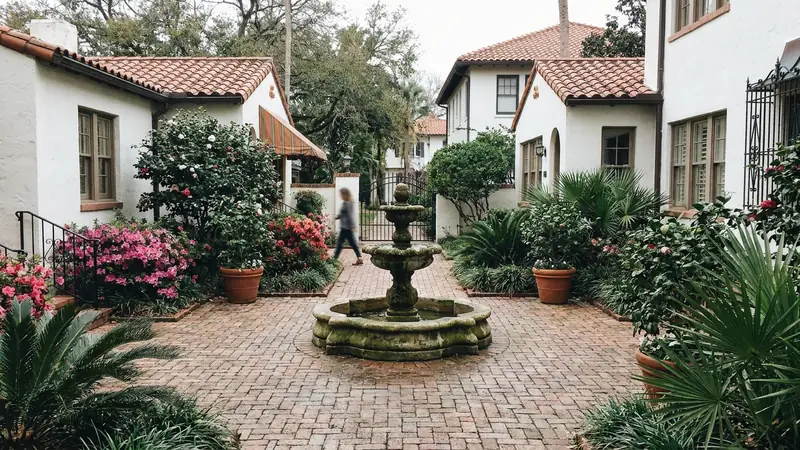
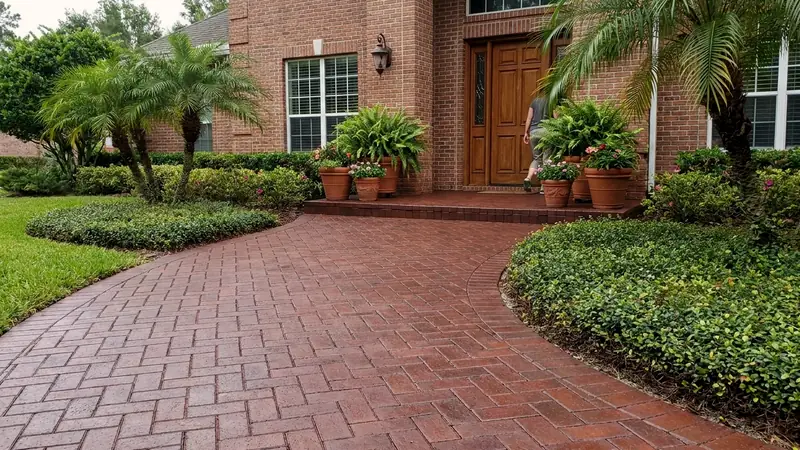
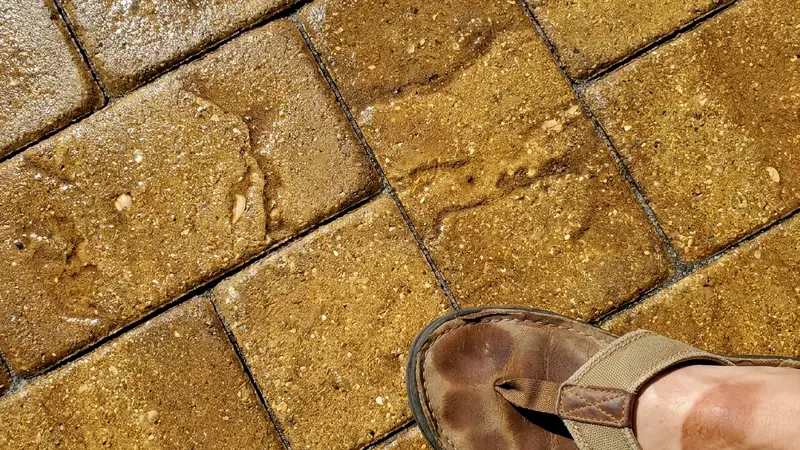
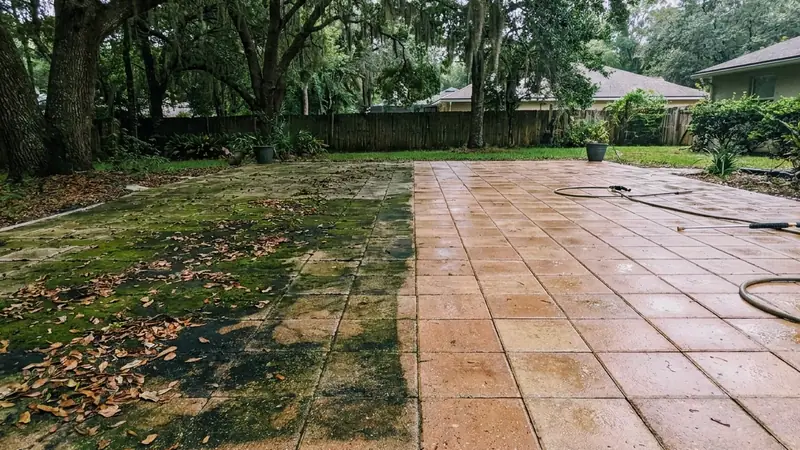
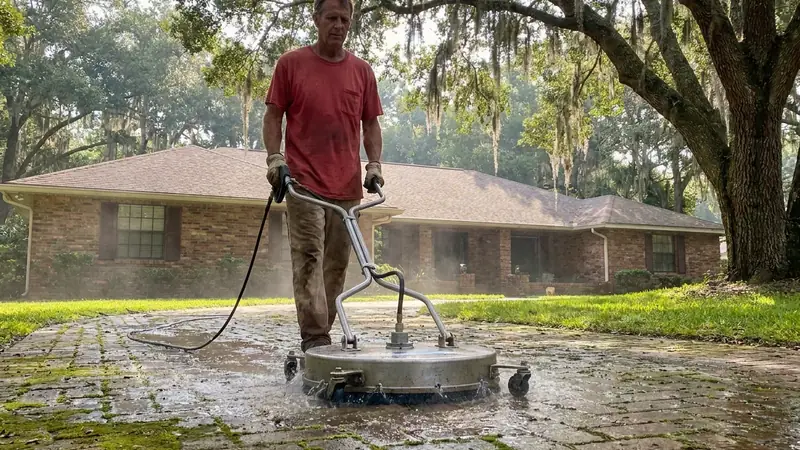
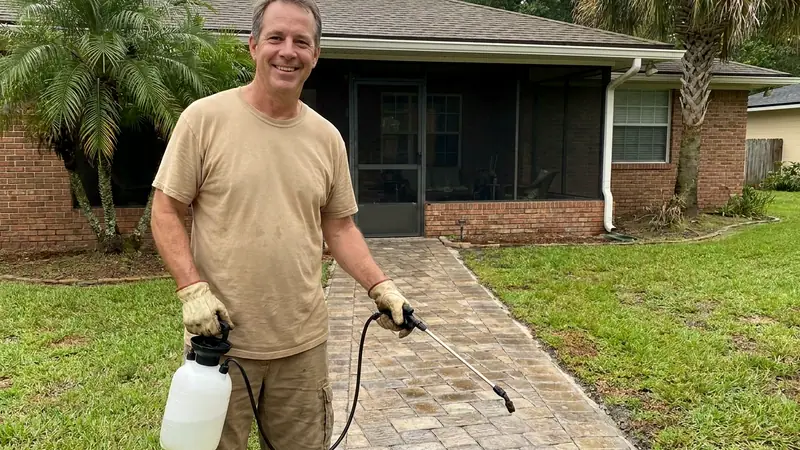
What do sealed pavers look like around San Marco?
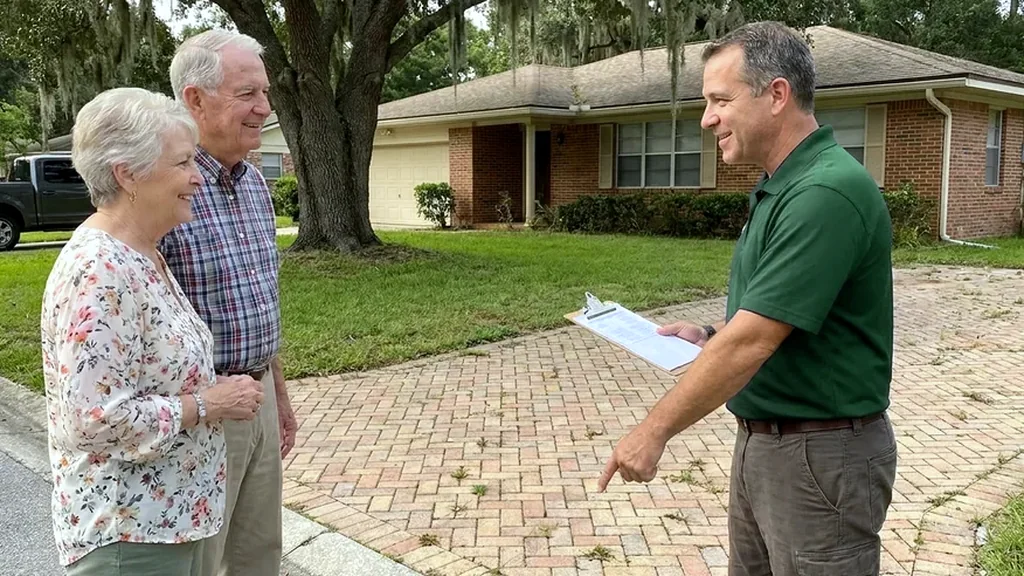
Why local matters in San Marco
A contractor who works the Southbank knows that many San Marco homes date from the 1920s and 1930s. That means older mortar, brick borders and mixed paving, so the first question is what each surface is made of and how it was last treated. A crew that skips it risks the wrong cleaner. To reach a local contractor, call (904) 569-7795.
Local crews also know how the leaf canopy changes a job. Oaks and magnolias drop debris that sits in joints, and the shade keeps everything damp. A contractor who sees this daily plans an extra clearing pass and extra drying time. That is a fair thing to ask about when you ask for a free estimate, and it should show up in the written plan.
Mature plantings and older fences mean a careful setup, with plants covered and gear carried in by hand. A contractor who knows older neighborhoods plans for that and says so in the quote. That is worth asking about before you pick anyone, since surprises on the day are what drive costs up. Request a visit with ask for a free estimate, with no obligation to hire.
What was San Marco before the houses went up?
It was part of the Villa Alexandria estate and a working brickyard. Telfair Stockton broke ground on 80 acres in 1925, and all 250 lots sold within three hours. The Gamble and Stockton Brick Company had dug the claypit that became Marco Lake, and a canal links the lake to the river. If you live near the lake, ask for a free estimate and say so.
The Acosta Bridge opened in 1921 and spurred subdivisions such as Alexandria Place, River Oaks and San Marco. South Jacksonville, incorporated in 1907, joined the city in 1932. Fletcher Park began in 1919 as housing for shipyard workers, with 158 houses designed in part by architect Henry Klutho. If you live by any of these San Marco sites, call (904) 569-7795 and give your street, and the contractor will plan around it.
Frequently Asked Questions
How many dollars per square foot does paver sealing run in San Marco?
The published range for a clean, sand and seal across the region is $1.75 to $3.25 per square foot. A larger San Marco lot tends toward the lower part of that range. Have the total area and the finish spelled out in the quote. If a bid is far below the range, ask what was left out.
Is paver sealing good for Florida homes?
For most yards, yes. Sun fades unsealed concrete pavers over time, and sealed joints hold their sand through summer storms. In a shaded San Marco yard, a sealed surface is also easier to wash later. Sealer does need a fresh coat after a few years.
Can I clean, sand and seal my pavers in San Marco?
Yes, and a local contractor can do all three. That is the standard job: the contractor washes the pavers, sweeps fresh sand into the joints, waits for the stone to dry and then seals. It is done in that order so dirt never ends up under the coat.
Is dish soap a good way to clean pavers before sealing in San Marco?
Dish soap is not part of a contractor's job. The contractor picks a cleaner suited to your stone and rinses it out. Sealer must go over a clean, dry surface, typically 24 to 48 hours after cleaning, so leave that step to the pro.
Does old brick in San Marco need a different sealer?
Often, yes. Old clay brick calls for a breathable penetrating sealer rather than a thick film, one regional company says. A film can trap moisture and cause flaking and haze. Tell the contractor where brick meets concrete pavers.
How long should sealer last on a San Marco walk?
Quotes run two to five years per coat, and one local firm suggests resealing every 3 to 5 years. Heavy shade, tires and sprinkler spray push it toward the short end, so a San Marco owner can check the surface each spring. Once water sinks in rather than beading up, the coat is done.
What does white haze on my San Marco pavers mean?
It is likely efflorescence, a mineral haze that does not weaken concrete pavers. Rain alone may not remove it, and sealer must not go over it. The contractor treats the haze before the coat goes on.
Will sealing change how my pavers look?
It can. A wet look deepens color, matte keeps a natural look, and a penetrating sealer leaves the stone almost unchanged. A wet look shows scuffs sooner. On a San Marco house with old brick or stone, many owners choose the quieter finish.
What if my San Marco pavers already have peeling sealer?
The failed coat has to come off before a new one goes on, and that makes the job cost more than a plain sealing. A Jacksonville company says oil-based coats must come off first. The contractor identifies the old product first, since water-based sealer cannot go over solvent-based.
Is sealing worth it for a small San Marco courtyard?
It can be, since a courtyard stays damp in shade and shows every stain. Small jobs cost more per foot, and some companies have minimum job sizes, so ask about that first. A courtyard measured together with a walk or a drive often prices better.
Nearby areas we serve
Ready for a Free Estimate in San Marco?
Call (904) 569-7795 and tell us about your pavers.
Free, no obligation